
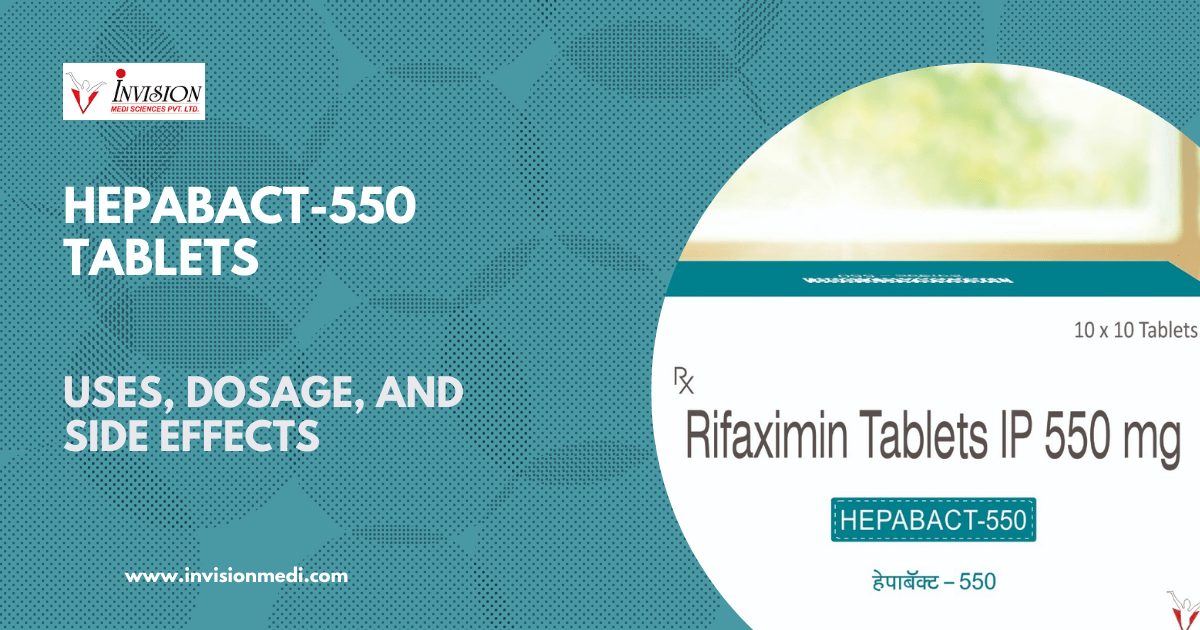
Gastrointestinal infections and liver-related complications can significantly impact quality of life. Managing intestinal bacterial imbalance effectively is essential for long-term health. HEPABACT-550 Tablets, containing Rifaximin 550 mg, is a gut-selective antibiotic widely prescribed for hepatic encephalopathy and certain intestinal bacterial conditions.
What is Rifaximin 550 mg?
Rifaximin 550 mg is a minimally absorbed antibiotic that works locally in the gastrointestinal tract. Unlike systemic antibiotics, it primarily stays in the intestine, targeting harmful bacteria without significant absorption into the bloodstream.
HEPABACT-550 Tablets are commonly prescribed to manage conditions linked to excessive or harmful gut bacteria.
Rifaximin 550 mg Uses
HEPABACT-550 Tablets are indicated for:
- Hepatic encephalopathy (reducing recurrence episodes)
- Irritable bowel syndrome with diarrhea (IBS-D)
- Traveler’s diarrhea caused by non-invasive strains of bacteria
- Small intestinal bacterial overgrowth (SIBO)
- Intestinal bacterial infections (as prescribed)
Mechanism of Action (MOA) of Rifaximin
Rifaximin works by inhibiting bacterial RNA synthesis. It binds to the beta-subunit of bacterial DNA-dependent RNA polymerase, preventing bacterial growth and replication.
Because Rifaximin is minimally absorbed from the gastrointestinal tract, it acts locally in the intestine. In hepatic encephalopathy, it helps reduce ammonia-producing gut bacteria, lowering blood ammonia levels and decreasing the risk of neurological complications.
Its localized action contributes to better tolerability and reduced systemic side effects.
Benefits of HEPABACT-550 Tablets
- Reduces recurrence of hepatic encephalopathy episodes
- Targets harmful intestinal bacteria effectively
- Minimal systemic absorption
- Well tolerated when used as prescribed
- Supports intestinal microbial balance
- Suitable for long-term management under medical supervision
Dosage of Rifaximin 550 mg
The dosage of HEPABACT-550 Tablets depends on the condition being treated and physician recommendation. It is usually taken orally with water, with or without food, as directed by a healthcare professional.
Do not alter or discontinue therapy without consulting your doctor.
Possible Side Effects
Rifaximin is generally well tolerated. However, some patients may experience:
- Nausea
- Abdominal discomfort
- Headache
- Flatulence
If severe diarrhea, allergic reactions, or unusual symptoms occur, immediate medical attention is advised.
Precautions
- Use only under prescription and medical supervision
- Inform your doctor about liver disorders or other ongoing medications
- Not recommended in patients with known hypersensitivity to rifamycin derivatives
- Pregnant and lactating women should consult a physician before use
Conclusion
HEPABACT-550 Tablets (Rifaximin 550 mg) provide a targeted, gut-selective approach for managing hepatic encephalopathy and specific intestinal bacterial conditions. With minimal systemic absorption and effective local action, it plays an important role in gastrointestinal and liver-related care when prescribed appropriately.
For more advanced gastroenterology solutions, explore the specialized product range from Invision Medi Sciences Pvt. Ltd.
FAQs
What is Rifaximin 550 mg used for?
It is commonly used to reduce recurrence of hepatic encephalopathy and manage certain intestinal bacterial infections.
How does Rifaximin help in hepatic encephalopathy?
It reduces ammonia-producing bacteria in the gut, helping lower blood ammonia levels.
Is Rifaximin a strong antibiotic?
It is a gut-selective antibiotic that acts locally in the intestine with minimal systemic absorption.
Can Rifaximin be used long term?
For hepatic encephalopathy, it may be prescribed for long-term use under medical supervision.
Does Rifaximin cause severe side effects?
It is generally well tolerated, but mild gastrointestinal discomfort may occur in some patients.
Invision Medi Sciences Pvt. Ltd. – Nurturing Health and Innovation:
Invision Medi Sciences Pvt. Ltd. is committed to pushing the boundaries of healthcare innovation. With a focus on precision and efficacy, the company strives to create solutions that not only alleviate symptoms but also contribute to the holistic well-being of individuals. Invision Medi Sciences is a trusted name in the pharmaceutical industry, dedicated to advancing healthcare for a healthier and happier world.
![Read more about the article GLAMOR-M [Glimepiride 2 mg + Metformin Hydrochloride IP 500 mg (ER)]: Uses, MOA, Benefits, and Recommended Dosage](https://www.invisionmedi.com/cloud/2024/02/GLAMOR-M-Glimepiride-2-mg-Metformin-Hydrochloride-IP-500-mg-300x158.png "GLAMOR-M [Glimepiride 2 mg + Metformin Hydrochloride IP 500 mg (ER)]: Uses, MOA, Benefits, and Recommended Dosage 2")
